
State-run telecom major Bharat Sanchar Nigam Ltd (BSNL) says it expects to increase its visibility in the domestic and international markets, besides improving company performance, as a fallout of the proposed initial public offering (IPO) of equity.

Gujarat Fluorochemicals Ltd on Wednesday said its subsidiary Inox Leisure Ltd is considering an entry into the capital markets through an initial public offer of 1.65 crore (16.5 million) equity shares.

Tata Group remained India's largest business conglomerate in market capitalisation in calendar year 2023 while the Mukesh Ambani camp raced ahead of the Adani businesses to become the second-largest. The Tata companies ended 2023 with a combined group market capitalisation of Rs 28.68 trillion, up 35 per cent from the Rs 21.2 trillion at the end of December 2022. Ambani's group mcap is Rs 19.42 trillion at the end of CY23, up 10.7 per cent from the Rs 17.6 trillion a year ago.

Sebi has long struggled with balancing the needs of small investors and those of the market.

Prominent exits by promoters included a Rs 15,300 crore share sale in Indus Tower by Vodafone Plc, a Rs 9,300 crore share sale by the Tata group in Tata Consultancy Services.

'It is a worrying trend as we are not seeing too much fresh capital being raised for new projects, plants, expansion or diversification. It's just private equity or venture capital or promoters cashing out.'

'There is a lot of interest from potential clients who have remained away from the markets in past years.' 'They are evaluating whether this is a good time to enter, especially since there are very few alternatives to earn meaningful returns.'

Investment bankers handling the IPO had said marquee global investors made big-ticket applications.

An alternative way is to make the Asba (Applications supported by blocked amount) facility compulsory for retail investors.

The value of FPIs (Foreign Portfolio Investors) holding in Indian equities reached $738 billion in the three months ended December 2023, marking a surge of 13 per cent from the preceding quarter, driven by the strong performance of the domestic stock market, according to a report by Morningstar. The value of FPIs investment was at $651 billion in the September quarter of the current fiscal. On a year-on-year basis, the value of such investments rose 26 per cent from $584 billion in December 2022.
Looking at the history of IPO success and failure stories, you would be smart to first fully understand the various aspects behind such offerings and makes the right choice to invest or not in IPOs.

The gains came on expectations that the company will post strong growth given its presence in application to peer services and the fast-growing communication platform as a service segment.

Rising for the fourth straight day, benchmark indices Sensex and Nifty settled marginally higher after a choppy session on Friday, tracking mixed global trends amid uncertainties on the geopolitical front. The BSE Sensex opened weak and declined 414.44 points to 55,049.95 in opening deals. But within minutes, it pared all its losses and jumped 369.56 points to 55,833.95. Facing volatility, the index finally settled at 55,550.30, higher by 85.91 points or 0.15 per cent.

Paytm will look to raise up to $1.5 billion as part of primary share sale, leading up to its initial public offering (IPO), which is planned for November, a person familiar with the developments said. The company is looking to file its draft red herring prospectus (DRHP) by July, according to sources. According to this person, though the details of the listing are being worked out, Paytm may take the qualified institutional buyer (QIB) route to list and issue fresh equity to raise funds.
The Cabinet Committee of Economic Affairs is all set to announce the guidelines for FDI in commodity exchanges. Following this, the Forward Markets Commission is expected to submit the proposal for ownership structure of exchanges before the Union ministry of consumer affairs.

The prospective bidders of Haldiram Snacks Foods (HSFPL), a leading food firm, have sought clarity on the ownership of the brand as it is currently owned by different family factions. The Delhi and Nagpur families have decided to merge their operations and formed a joint venture to sell part of their stake. On the other hand, the Kolkata family runs its separate, independent operations. Bankers said prospective bidders of the company do not want any confusion over the brand in future. They have sought clarity over usage of the brand.
Idea Cellular on Wednesday said it is "seriously evaluating" going for an initial public offering in the domestic market as part of efforts to fund its expansion plans, although a decision on the issue is yet to be taken.

The new wing will be known as the corporate finance investigation department, which will be headed by one of Sebi's executive directors. This department will have information technology solutions experts, particularly to detect the menace of frauds.

LIC's Rs 3,000 crore bid helped HAL reach the minimum 10 per cent dilution threshold required for listing, sources said
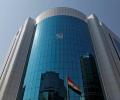
Regulator Sebi on Friday approved a slew of measures to further improve the ease of doing business for market participants, including providing relaxations to Foreign Portfolio Investors (FPIs) and entities looking to raise funds through initial share sale. The proposals were cleared by the Sebi board during its meeting on Friday.

Capital markets regulator Sebi has rejected a proposal by the National Stock Exchange (NSE) to extend the trading hours in the equity derivatives segment citing a lack of feedback from the stock brokers community. "Currently, there is no plan to extend the timings as Sebi has returned our application as the stock brokers have not given the feedback that Sebi wanted. "So, as of now, the extended time frame (plan) is shelved," NSE MD and CEO Ashishkumar Chauhan said in a post-earnings analysts call.

Power generation decelerated 4.7 per cent year-on-year (Y-o-Y) to 155 billion units (BU) in August 2024. This was the first downtrend in many years, albeit on a high base - generation had increased 19 per cent Y-o-Y to 163 billion units (BU) in August 2023. The dip was partly due to excess rainfall, which pared cooling demand and also reduced need for irrigation.

Management quality and issue price are key concerns for investors; over 60 per cent of the issues this financial year are trading below issue price.

The shares - close to 30% of the total holding - are expected to list on rival National Stock Exchange on or around February 3.
Spectacular returns by the recent initial public offerings on listing day are prompting a growing number of retail investors and even high net worth investors to borrow funds at a costly 16 to 17 per cent (for two or three weeks) to bid for IPO shares.
"The decision has been taken due to prevailing adverse market condition...although the QIB and HNI portions of the IPO were fully subscribed and the overall book was closed to 90 per cent," the company said in a statement.
Oil India's IPO will open on schedule inspite of the market volatility, stated government sources.
Prithvi Haldia, managing director of Prime Database, a company tracking corporate and primary market developments, is however of the view that primary markets usually follow the secondary market. IPOs have suffered mainly as the timing was not right.

Going ahead, experts say, the fundraising trend in the primary market will depend on how the secondary market performs against the backdrop of the outcome of general elections and global cues.

Top Indian private sector lender ICICI Bank, which owns nearly 68 percent of the insurer, is selling up to 181.34 million shares in the IPO.

Macroeconomic data announcement, Omicron situation and global trends will be the major driving factors for the equity market in the first week of the new year 2022, according to analysts. In what turned out to be a historic year, the Indian stock indices went past multiple milestones and the 30-share Sensex made an annual gain of 10,502.49 points or 21.99 per cent in 2021. Religare Broking Vice-President (Research) Ajit Mishra said, "This week marks the beginning of a new month and participants will be closely eyeing some crucial high-frequency data like monthly auto sales, India manufacturing PMI and India services PMI. "Besides, updates on the COVID-19 situation and performance of global markets will also be critical."

'Our advice is to put money into equities now rather than staying away.'

Equities went into a tailspin on Wednesday after the Reserve Bank surprised the market with a mid-cycle rate hike in a bid to tame soaring inflation.

Tata Sons Private Limited, the holding company of the Tata group, witnessed a precipitous drop in its net debt to Rs 5,656 crore in the 10 months ended January this year, as its cash reserves burgeoned to Rs 9,516 crore during this period. Eight years ago, in 2015-16, Tata Sons reported a net debt of Rs 5,132 crore; from March 2017 until March 2023, this figure was above the Rs 14,700 mark, peaking at Rs 27,437 crore at the end of March 2019, according to data sourced from Capitaline. The company's gross debt nearly halved to Rs 15,173 crore until January 2024 on a standalone basis, down from a peak of Rs 31,363 crore reported in the financial year ended March 2019.

'We are focused on playing on our strengths, which are technology, and building a large profitable business by working with banks as well as non-banks and NBFCs for loans.'

Reserve requirements, mandatory investment in G-secs under Companies Act may slow lending for HNI investment in IPOs.
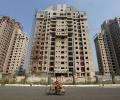
Property sales have been sluggish and the sector has been facing headwinds. So, firms are in wait-and-watch mode.

According to sources, BSE is seeking an offering that would value it at about Rs 4,000-5,000 crore (Rs 40-50 billion).

This is the biggest IPO in the Indian market since Bharti Infratel's over Rs 4,000 crore public offer in December 2012.
